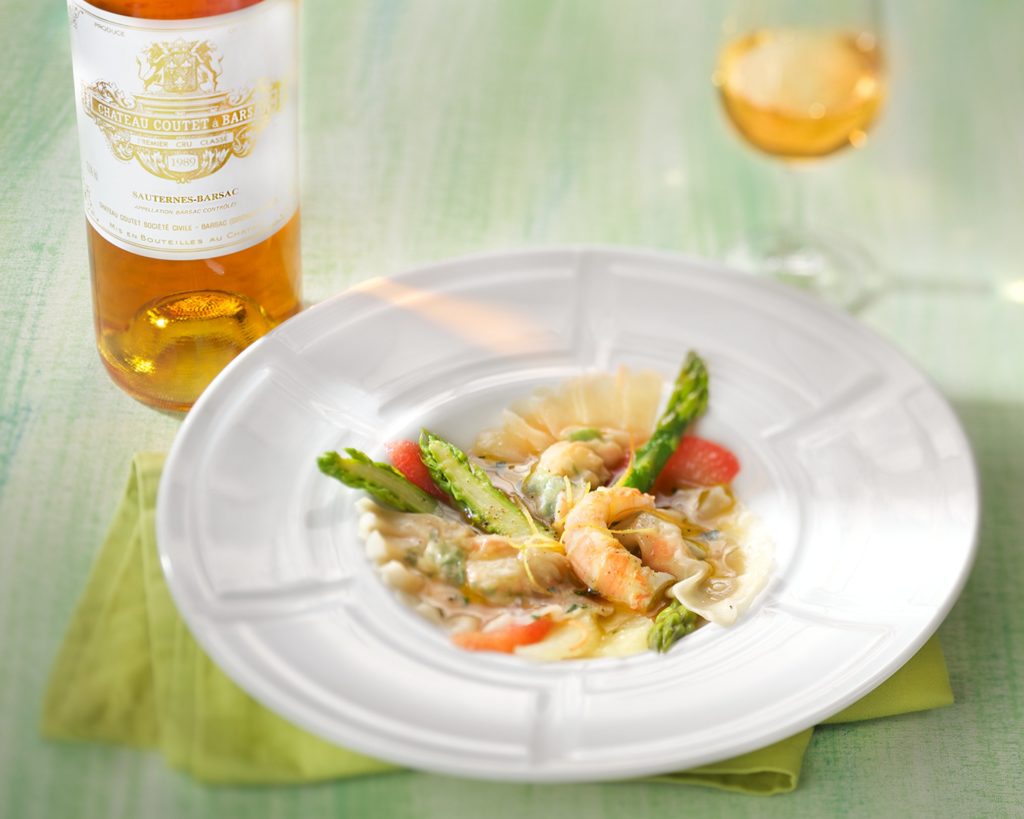
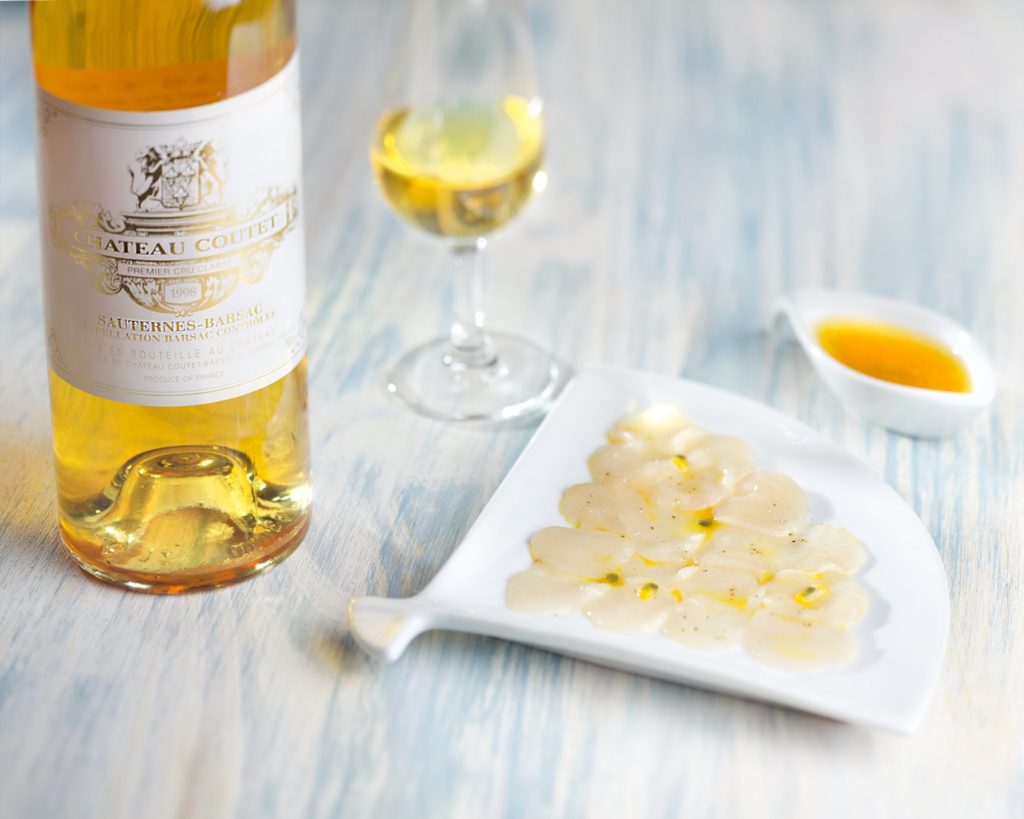
In 1787, former U.S. President Thomas Jefferson, then ambassador to France, celebrated Château Coutet (pronounced Cootay or COU-tett) as the best Sauternes from Barsac. In 1855, the estate was classified as a First Growth and recognized for its continued excellence. Today, as the oldest and largest Barsac estate, Château Coutet stays true to its tradition of distinction and quality. The finest Barsac-Sauternes is produced annually under the direction and management of the Baly family as well as the technical and commercial collaboration of the Baron Philippe de Rothschild S.A. company, the vineyard's exclusive distributor.
An English fortress built in the 13th Century, this citadel with its square tower, a design typical of the era’s military constructions, became a wine producing estate in 1643. Previously owned by the Lur-Saluces family, the property was home to Chateau d’Yquem’s horse stables, transformed in the late 19th Century into a 110-meter long cellar (the longest in the appellation). A second round tower in the property’s northern plot, a Château Coutet landmark, was built originally to breed pigeons and peacocks for the region’s Gascon lords. Vertical wine presses from the 1920s, a 14th Century chapel and a Bordeaux cobblestone courtyard are a testament to the estate’s rich architectural and regional history.
AOC Barsac
First Growth in 1855
Surface area: 38.5 ha (95 acres)
Soil: Clay with a limestone sub-soil
Grape varieties: 75% of Sémillon, 23% of Sauvignon Blanc and 2% of Muscadelle
Average age of vines: 35 years
Plantation density: 7,500 vines/ha (3,000 vines/acre)
Vineyard management: "Taille à cot" (traditional Sauternes pruning) and rational cultivation
Harvest: Manual by tries (successive passes)